Onion Airflow Ridgevent for Industrial Factory Ventilation
Industrial buildings often face a common challenge: excessive heat buildup, poor air circulation, and inadequate roof ventilation. In large factories, warehouses, workshops, and production sheds, hot air naturally rises and collects below the roof. Without an effective outlet, this heat can remain trapped inside the building and make the working environment uncomfortable.
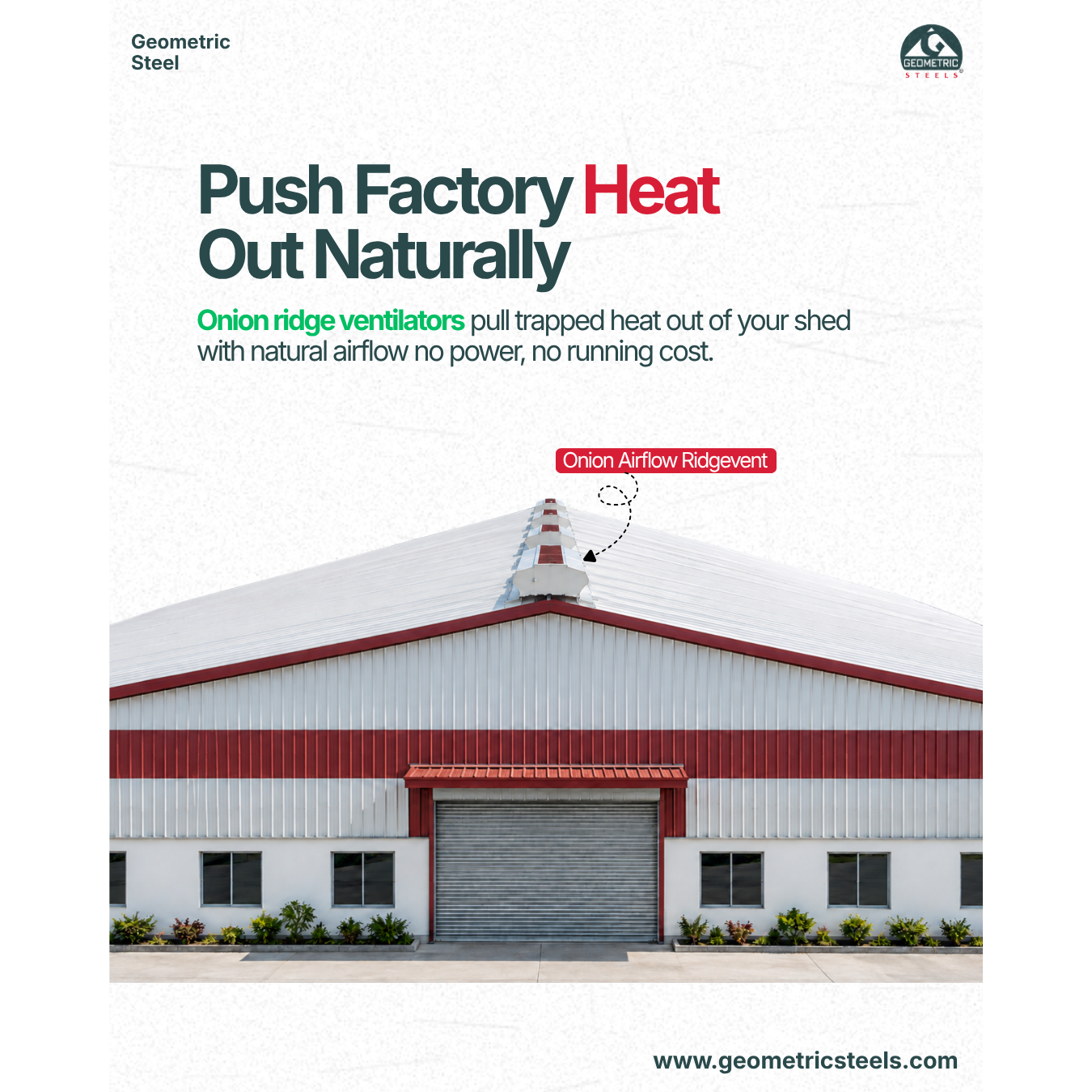
An Onion Airflow Ridgevent provides a practical solution by using the natural movement of hot air. Installed along the roof ridge, an industrial ridge ventilator allows accumulated hot air to escape naturally while supporting continuous airflow through the building.
For businesses searching for an industrial ventilation system, factory ventilation system, or natural ventilation system for factory, ridge ventilation can be an important part of an efficient building design.
What Is an Onion Airflow Ridgevent?
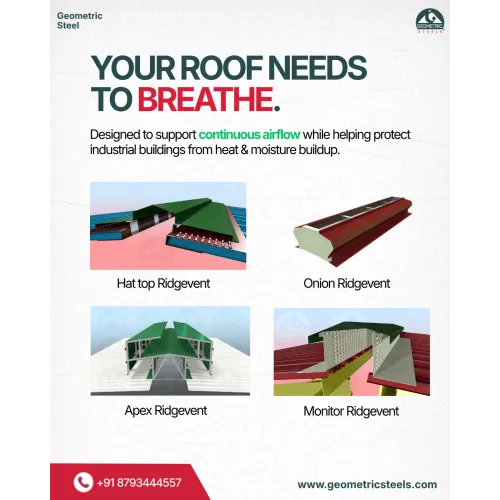
An Onion Airflow Ridgevent is a natural roof ventilation system installed at the highest point of an industrial roof. Since hot air naturally rises, the roof ridge is an ideal location for providing an exhaust path.
As heat generated by machinery, production processes, sunlight, and human activity rises toward the roof, the ridgevent helps release this accumulated hot air outside. At the same time, fresh air can enter through strategically provided openings at lower levels of the building.
This creates a natural airflow cycle without depending entirely on powered exhaust equipment.
Businesses looking for an industrial roof ventilator, ridge ventilator for factory, or natural roof ventilation system can consider this type of solution depending on their building design and ventilation requirements.
Natural Factory Ventilation Without Continuous Power
One of the key benefits of an Onion Airflow Ridgevent is its ability to support ventilation without continuous electrical operation. Unlike powered exhaust fans, a natural ridge ventilation system does not require a motor to move air through the roof outlet.
This makes natural factory ventilation particularly relevant for large industrial buildings where ventilation is required throughout operating hours.
By using the natural tendency of hot air to rise, a roof ridge ventilator can continuously support heat exhaust while reducing dependence on powered ventilation equipment.
Why Factory Roof Ventilation Matters
A large industrial shed can contain a substantial volume of hot air. If this air cannot escape efficiently, it can accumulate beneath the roof and contribute to uncomfortable indoor conditions.
An effective factory roof ventilation system can help provide a defined escape route for rising hot air. This becomes particularly important in facilities with:
- High internal heat generation
- Large production areas
- Metal roofing systems
- Manufacturing machinery
- Welding and fabrication operations
- High-occupancy work areas
- Large warehouse spaces
- Industrial processes generating heat
A properly designed industrial ventilation system should consider the complete airflow path rather than focusing only on the roof outlet.
Applications of Onion Ridge Ventilation
Onion Airflow Ridgevents can be considered for a wide range of industrial and commercial applications. Depending on the building design, they can be used for factory ventilation, warehouse ventilation, industrial shed ventilation, workshop ventilation, and production facility ventilation.
Typical applications include:
- Manufacturing factories
- Industrial warehouses
- Engineering units
- Automobile manufacturing plants
- Sugar factories
- Fabrication workshops
- Storage warehouses
- Production sheds
- Processing facilities
- Large industrial buildings
For facilities searching for a ridge ventilator manufacturer in India or an industrial roof ventilation solution, the building's size, roof profile, heat load, airflow requirements, and fresh-air openings should be evaluated before selecting the appropriate system.
How a Natural Ridge Ventilation System Works
The working principle is straightforward. During production and hot weather conditions, air inside the building becomes warmer. Since warm air is lighter, it moves upward toward the roof.
The roof ridge ventilator provides an outlet at the highest point of the building. Hot air moves toward this opening and escapes outside. Fresh replacement air can enter through lower-level openings, doors, louvers, or other designed air inlets.
This creates a continuous natural ventilation cycle.
For this reason, natural ventilation for industrial buildings is often designed as a combination of high-level exhaust and low-level air intake.
Choose the Right Industrial Ventilation Solution
Installing a ridgevent is only one part of designing an effective factory ventilation system. The number and placement of vents should be considered along with building dimensions, roof height, internal heat sources, prevailing wind conditions, air intake locations, and the required ventilation rate.
A properly planned industrial roof ventilation system can help improve natural air movement and provide a dedicated pathway for accumulated hot air to escape.