
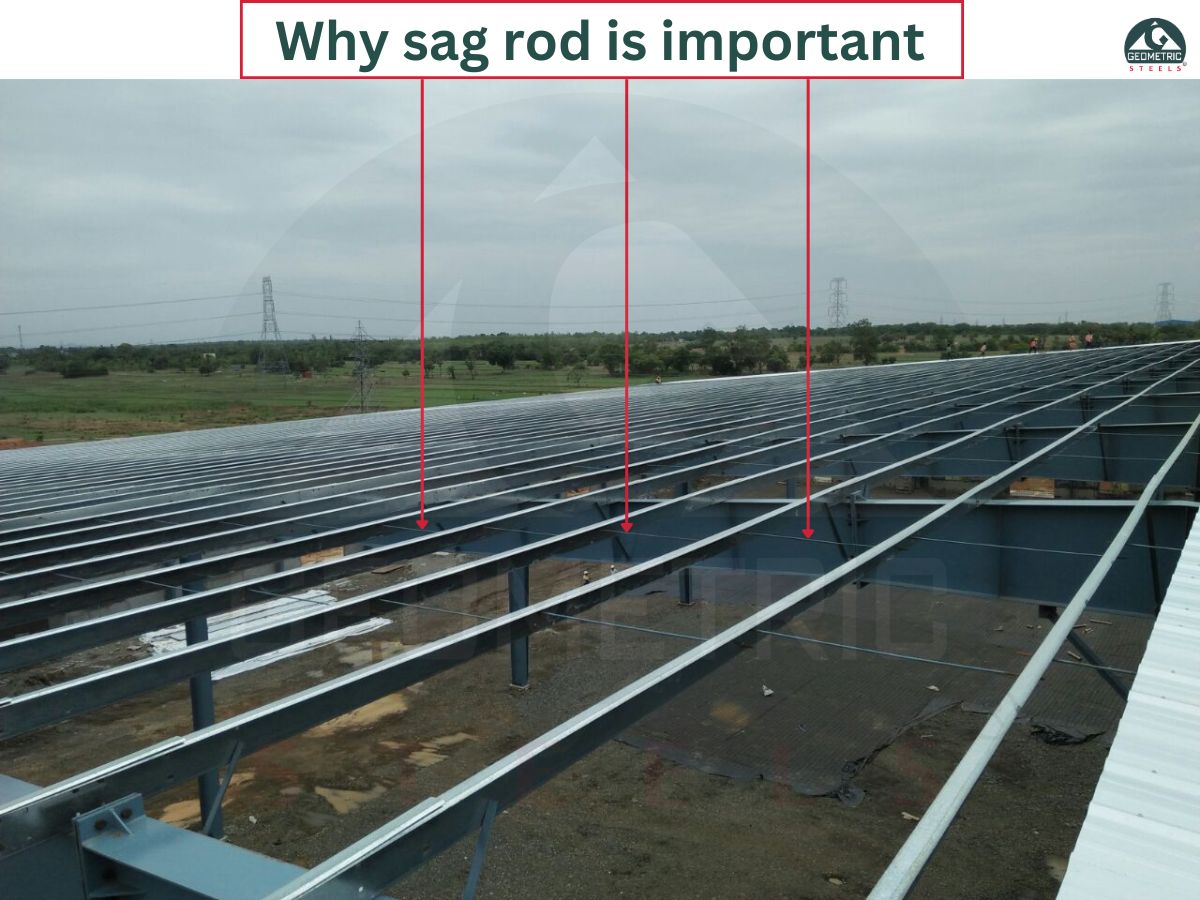
In steel building construction, several components are crucial for maintaining the framework's stability and structural integrity. Among these, sag rods are particularly important for supporting purlins and girts. Unlike turnbuckle rods or clevis rods, sag rods provide lateral support for these members, ensuring their alignment and preventing lateral bending and twisting. This blog explores the specifics of sag rods, their applications, and their significance in construction.
The Functionality of Sag Rods
Sag rods are typically used alongside Z-sections, which are common as girts and purlins in steel structures. These rods, available in diameters ranging from 12mm to 16mm, pass through the members they support, such as C or Z purlins. Their primary function is to provide lateral alignment and support, ensuring proper attachment of steel panels and preventing lateral bending or twisting of purlins and girts under load.
Installation and Customization of Sag Rods
The installation of sag rods involves passing the rod through the supported members and securing them with standard nuts and washers, eliminating the need for left-hand threading. Sag rods are often customized to fit between two girts, with holes cut in the girts to accommodate the rods. The size of the nuts and washers can be adjusted based on the rod's diameter, offering installation flexibility.
Structural Issues Addressed by Sag Rods
In steel building construction, components like purlins and girts often face challenges related to lateral stability. Z-shaped sections, typically fixed at one end to a beam or rafter, can leave the top flange unsupported, leading to buckling under lateral loads from wind, seismic activity, or operational forces. Sag rods provide the necessary lateral support to the top flange, preventing buckling and ensuring the structure's stability.
Practical Application of Sag Rods
To illustrate the practical application of sag rods, consider a steel pipeline's longitudinal section. Various lateral loads, including wind, frictional, and notional loads, can cause the columns to buckle about their minor axis. By connecting these columns with sag rods, lateral loads are transferred through the rods, preventing buckling and maintaining column stability.
In the context of Z-shaped purlins, sag rods connect the top flanges, providing lateral support and preventing buckling under load. This application is vital for ensuring the structural integrity of the roof and walls of steel buildings.
Visualizing Sag Rod Implementation
Imagine a series of purlins arranged parallel along the length of a steel structure, connected by sag rods placed near the top flange in the web part of the purlin. Alongside horizontal sag rods, diagonal sag rods provide additional lateral support, particularly at the purlins' ends, where the buckling risk is highest.
The Importance of Diagonal Sag Rods
While horizontal sag rods offer essential lateral support, diagonal sag rods are equally important for overall structural stability. They help transfer lateral loads to specific points, directing them to the building's foundation and preventing buckling by effectively managing lateral loads.
Practical Tips for Using Sag Rods
For optimal performance and structural integrity, consider the following best practices when using sag rods:
- Ensure Proper Alignment: Proper alignment is crucial for effective lateral support. Misaligned rods can lead to inadequate support and structural issues.
- Use Appropriate Diameters: Choose rod diameters that meet the project's specific requirements, providing necessary support without compromising structural integrity.
- Consider Customization: Customizing sag rods to fit specific dimensions and requirements can enhance support and alignment.
- Incorporate Diagonal Rods: Diagonal sag rods provide additional lateral support, particularly at the purlins' ends, enhancing structural stability.
- Regular Inspections: Regular inspections of sag rods and the overall structure ensure that the rods remain in good condition and continue to provide necessary support.
Sag rods are vital components in steel building construction, offering essential lateral support to purlins and girts. By preventing buckling and maintaining alignment, sag rods ensure the structural integrity and stability of steel structures. Understanding their functionality, installation, and practical application is crucial for construction industry professionals, as these components are integral to the performance and safety of steel buildings. Whether used in horizontal or diagonal support systems, sag rods are indispensable in modern construction, helping steel structures withstand various lateral loads and remain stable over time.
About Geometric Steels
Geometric Steels is a leading manufacturer of roofing, ventilation, and secondary construction material products. Committed to innovation and quality, we offer customized solutions tailored to meet our clients' specific needs. Our experienced staff and advanced technology ensure our products are reliable and designed for optimal performance in various construction applications.